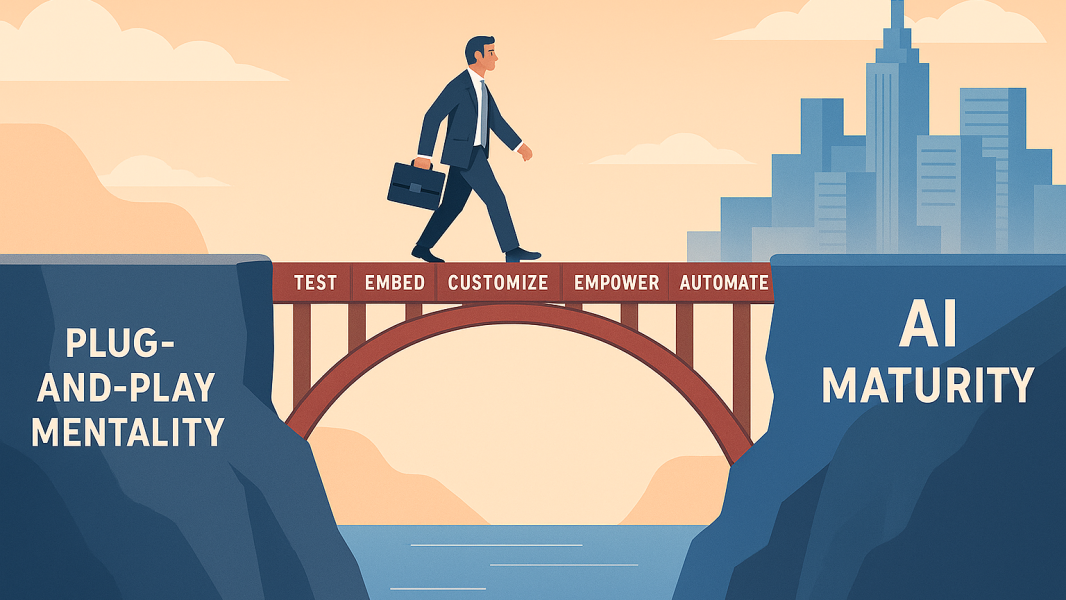
Artificial intelligence isn't coming — it's already here. From predictive analytics to anomaly detection, AI is embedded in the very tools businesses use to manage finance, operations, and strategy. For companies running on NetSuite, the shift is especially clear: AI is no longer a buzzword; it's becoming part of the platform itself.
Yet while adoption of AI tools is accelerating, a problem is emerging: most business leaders and teams don't fully understand how AI works, how to evaluate its outputs, or how to use it responsibly. This AI literacy gap is what experts call the real AI crisis.
And for NetSuite users, this gap could mean the difference between leveraging AI for competitive advantage and blindly trusting systems that may introduce risk.
What Do We Mean by "AI Literacy"?
AI literacy is not about turning every executive into a data scientist. Instead, it's about fluency — the ability to engage with AI tools intelligently, critically, and ethically.
Scholars and practitioners generally agree that AI literacy rests on four pillars:
- Know and Understand – grasp the basics of AI, machine learning, and what these systems can and cannot do.
- Use and Apply – learn how to integrate AI into workflows to solve problems, analyze data, and create value.
- Evaluate and Create – critically assess AI outputs, spot errors or bias, and (for some roles) build ethical applications.
- Ethics – reflect on fairness, accountability, transparency, privacy, and broader social impacts.
In other words: AI literacy empowers leaders to use AI without being used by it.
Why AI Literacy Matters for Business Leaders
For executives and managers, AI literacy is becoming as foundational as financial literacy or digital literacy. It matters for three reasons:
1. Competitive Advantage
AI-literate leaders can identify where AI adds real value — and where it doesn't. According to the World Economic Forum, AI and data literacy are among the "core skills for 2030." Companies that get ahead on this front will innovate faster, reduce inefficiencies, and stay relevant.
2. Risk Management
Without AI literacy, leaders risk blindly adopting flawed tools. Biased algorithms, opaque forecasts, and unverified outputs can undermine trust. A literate leader knows to ask: What data trained this system? How was this model evaluated?
3. Strategic Foresight
AI literacy equips leaders to distinguish hype from reality. It enables them to spot opportunities, forecast disruption, and embed the right level of human oversight into every AI-driven process.
The Organizational AI Literacy Crisis
Many firms are racing to deploy AI — but neglecting the human foundation. Billions have been spent on tools and platforms, while far less has gone into upskilling people.
The result? A dangerous mismatch: powerful AI in the hands of users who don't understand it. That leads to misuse, overreliance, and in some cases, backlash.
As one expert put it:
"AI and data literacy can't just be for the high priesthood. We must prepare everyone to become citizens of data science."
For NetSuite customers, this isn't abstract. If your finance team can't interpret an AI-generated flux analysis, or your operations manager doesn't understand the limits of an AI forecast, your company risks decisions based on flawed assumptions.
Practical AI Literacy Skills for Leaders
What does AI literacy look like in practice? Businesspeople don't need to code models — but they do need core competencies.
- Understand: Know how AI systems work under the hood. AI is not magic; it's pattern recognition, probability, and statistics. Understanding limitations (like bias in training data) helps temper overconfidence.
- Use: Apply AI to practical tasks — forecasting, anomaly detection, reporting — but with human judgment in the loop.
- Evaluate: Scrutinize AI outputs. Is this prediction reliable? Does the anomaly flagged make sense? Does the chatbot response reflect company policy?
- Ethics: Consider the consequences of AI decisions. Who is accountable if an AI-driven approval process rejects a valid vendor? Are financial forecasts transparent enough to be shared with investors?
Why AI Literacy Matters for NetSuite Users
NetSuite is rapidly embedding AI across its ecosystem. Features like predictive financials, AI-assisted anomaly detection, and generative reporting are already appearing. For users, AI literacy is what turns those features from gimmicks into game-changers.
Example: The CFO and the Forecast
A CFO reviewing an AI-generated forecast shouldn't accept it blindly. With AI literacy, they know to ask:
- What historical data trained this forecast?
- How does it handle outliers or extraordinary events (e.g., COVID, tariff changes)?
- What's the margin of error?
Example: The Controller and the Flux Report
AI can now generate flux analysis reports in minutes. But literacy ensures the controller knows how to:
- Cross-check findings against raw NetSuite reports.
- Spot when AI explanations are plausible versus when they're surface-level.
- Attach confidence scores and caveats before sharing with auditors or the board.
Example: The Operations Manager and Anomaly Detection
AI might flag a sudden spike in expenses. A literate manager will ask:
- Was this a real anomaly or a known seasonal expense?
- Could this be a false positive caused by incomplete data?
- What action should be taken — investigate, adjust, or ignore?
In each case, literacy is the difference between trusting AI as a partner and being misled by a black box.
What Management Can Do to Grow AI Literacy
Leadership plays a critical role in cultivating AI literacy across the organization. Here's how:
- Model Curiosity and Caution – Executives should ask thoughtful questions of AI outputs themselves. This signals to teams that skepticism is healthy, not a lack of trust.
- Invest in Training – Sponsor workshops, bootcamps, and certifications that teach AI basics tailored to finance, operations, and ERP use cases.
- Encourage Cross-Functional Dialogue – Bring finance, IT, and operations leaders together to discuss how AI is being applied in NetSuite.
- Create Guardrails – Establish policies on when AI outputs can be acted upon automatically versus when they require human sign-off.
- Recognize Literacy as a Skill – Treat AI literacy as a competency in performance reviews, just as digital literacy and financial literacy once were.
What Individuals Can Do to Become AI Literate
AI literacy doesn't have to wait for a corporate initiative. Professionals can start building their own skills today:
- Learn the Basics – Explore free resources like Crash Course AI or the AI4K12 framework for accessible explanations.
- Experiment Safely – Use AI responsibly for small tasks, like drafting meeting summaries or analyzing NetSuite reports, while cross-checking results.
- Follow Thought Leaders – Stay current by reading reports from organizations like the World Economic Forum and OECD.
- Practice Critical Evaluation – When an AI tool provides output, pause and ask: Does this make sense? What's missing?
- Engage with Ethics – Read about issues like algorithmic bias and privacy so you're aware of risks and responsibilities.
By taking ownership of their learning, individuals can become "AI fluent" even in environments where formal training is still catching up.
The Road Ahead: AI Literacy in the NetSuite Ecosystem
AI literacy is not a one-time training. It's an evolving skill set — just like financial literacy or digital literacy. And for NetSuite customers, it will become a defining factor in how much value they can actually extract from the platform.
NetSuite's roadmap is clear: more AI features are coming, from predictive dashboards to autonomous anomaly detection to generative reporting tools. Each of these promises efficiency, but each also raises new questions about data quality, model accuracy, and accountability.
The organizations that thrive will be those that:
- Embed literacy into daily NetSuite use — treating every AI-generated report as a decision-support tool, not a decision-maker.
- Pair NetSuite AI with real NetSuite reports — using Income Statements, Balance Sheets, and Trial Balances as the "source of truth" for validation.
- Invest in people, not just tools — making sure finance teams, controllers, and operations managers understand how to interpret AI features rather than outsourcing judgment to them.
For NetSuite users, AI literacy means three things:
- Trust the system enough to use it.
- Verify outputs against trusted NetSuite data.
- Thrive by combining the speed of AI with the wisdom of human judgment.
The bottom line: AI literacy is the foundation for turning AI from a risk into a resource. For NetSuite-powered businesses, it's the key to unlocking AI's potential without losing control.